News & Updates
Customs Support for First-Time Importers
Customs support for first time importers helps UK and Ireland businesses set up declarations, avoid border delays and build compliant processes confidently.
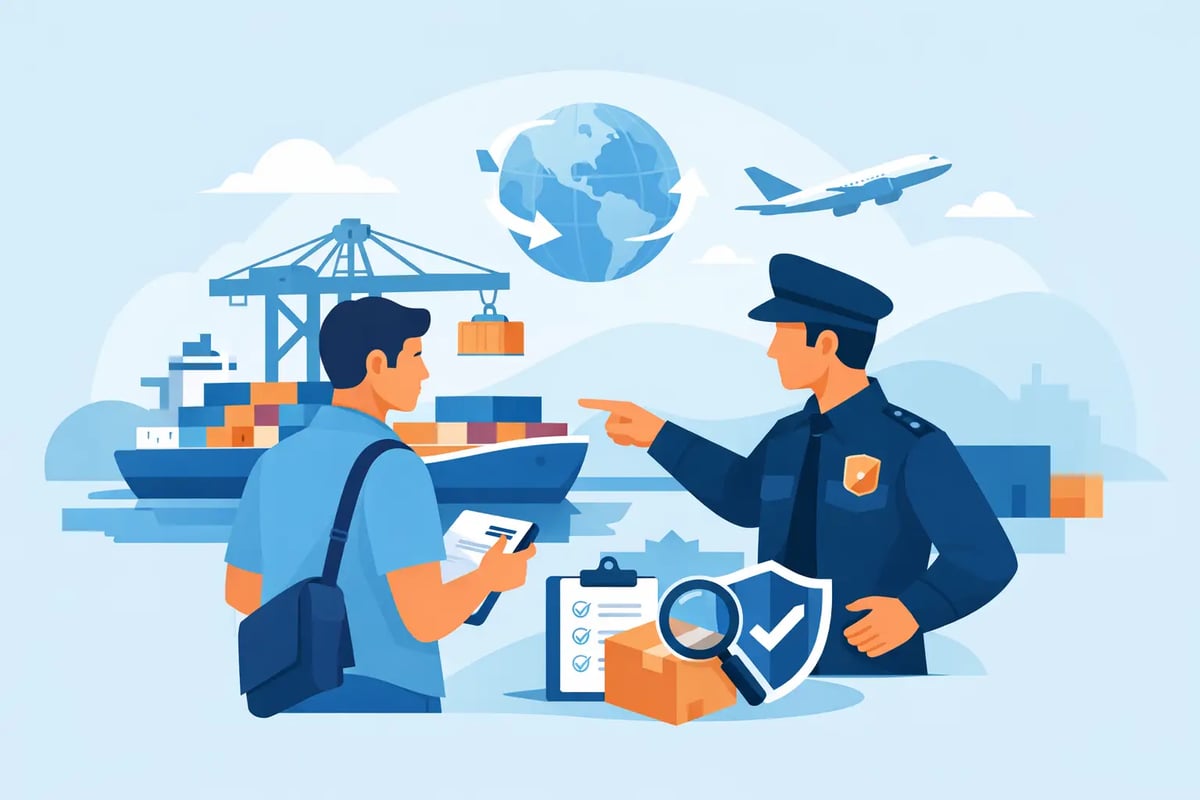
A first import can look straightforward: agree a price, arrange a carrier and wait for the goods to arrive. The customs work often begins much earlier. Customs support for first-time importers gives your business a practical way to prepare declarations, understand the charges involved and prevent a shipment being held up at the border.
For UK and Ireland businesses, the right approach is not simply to submit a declaration and hope for the best. It is to establish a repeatable process that records the right data, assigns clear responsibilities and gives staff access to expert help when a transaction falls outside the normal pattern.
What first-time importers need before goods move
Customs declarations rely on information from across the business and supply chain. Your supplier may hold the product details, your finance team may confirm payment and value, and your freight forwarder may control the arrival date. If that information is incomplete or inconsistent, the declaration can be delayed or submitted incorrectly.
Start with an Economic Operators Registration and Identification number, usually known as an EORI number. A GB importer will generally need a GB EORI to import goods into Great Britain. Where goods are moving into Ireland, or where your business has Irish customs obligations, an EU EORI and Revenue registration arrangements may also be relevant. The exact requirement depends on the movement, the party acting as importer and where goods are being released to free circulation.
You also need to be clear about who is the importer of record. This is the party responsible for the customs declaration, duty and import VAT position. Do not assume that a supplier, courier or freight provider has accepted this role because they are arranging transport. Confirm it in writing before collection.
The commercial terms matter too. Incoterms set out which party takes responsibility for transport, risk and certain costs, but they do not remove the need to establish who makes the declaration and who is liable for customs debt. Delivered Duty Paid arrangements, for example, can create complications if the overseas seller is not properly established or registered for the import process.
The data that decides whether your declaration is right
A customs declaration is only as reliable as the commercial data behind it. First-time importers should build a basic product and shipment record before the goods are despatched. That record needs a clear goods description, commodity code, customs value, origin, quantity, weight and supporting documents.
Commodity codes are more than a product label
The commodity code determines the duty rate, possible restrictions, licences and the data required on the declaration. A vague description such as “parts”, “accessories” or “samples” is rarely enough to classify goods correctly.
Classification should reflect what the item is, what it is made from, how it works and, in some cases, its intended use. A wrong code can mean overpaid duty, underpaid duty or a declaration that does not meet the requirements for controlled goods. If you import a narrow and stable product range, it is sensible to create an approved commodity-code list and review it whenever the product changes.
Value and origin need evidence
Customs value is not always the invoice total. Depending on the transaction, it may need to include costs such as packing, commissions, royalties or transport and insurance to the border. The value declared must be supported by commercial records, so retain purchase orders, invoices, freight charges and evidence of any adjustments.
Origin is equally important. It is not simply the country a shipment was sent from. Preferential origin can affect the duty payable under a trade agreement, including UK-EU arrangements, but only where the goods meet the applicable rules and the required origin evidence is available. A supplier statement should be checked, not treated as a guarantee.
Choose the right customs support model
There is no single model that suits every first-time importer. The best choice depends on shipment volumes, the complexity of your goods, how quickly you need declarations processed and whether you want to develop internal capability.
Using a customs agent can be the right starting point when imports are occasional, product lines are varied or your team has no customs experience. The agent can prepare and submit declarations, but your business still needs to provide accurate information and retain records. Outsourcing processing does not outsource your underlying responsibility as the importer.
Processing declarations in-house gives you more direct control over data, timing and internal reporting. Cloud-based customs software can make this manageable for operational staff, particularly when it connects directly to systems such as HMRC’s Customs Declaration Service, CSPs and Revenue’s ROS. However, in-house processing needs training, ownership and a process for handling exceptions.
A hybrid model is often the most practical route. Your team can manage standard imports in-house once the process is established, while using expert support for new commodity codes, preference claims, customs valuation questions or urgent problem shipments. Custran supports this approach through software, agency processing, training and ongoing operational advice, allowing businesses to build confidence without being left on their own.
Build a process before the first declaration
The strongest customs process is not complicated. It gives each party a defined task and makes sure the declaration is checked before goods reach the port, airport or terminal.
First, agree what your supplier must send and when. At a minimum, this should include the commercial invoice, packing list, accurate product descriptions, country of origin, commodity code where available, transport details and any licences or certificates. Request documents before despatch, not after the lorry is already at the border.
Next, decide who will submit the declaration and how they will receive data. A customs agent may use a secure data template or portal. An in-house team may enter information directly into customs software. Either way, avoid relying on unstructured email chains. A standard import checklist makes it easier to spot missing values, inconsistent quantities and unclear product descriptions.
Finally, set a simple approval point. A trained employee should confirm that the commodity code, value, origin and Incoterm are sensible before the declaration is submitted. For repeat imports, this becomes a quick validation exercise. For new products or suppliers, it should trigger a fuller review.
Plan for duty, import VAT and cash flow
A surprise tax bill can turn a profitable purchase into an expensive one. Before placing an order, estimate customs duty and import VAT using the proposed commodity code, value and origin. This allows your finance team to budget correctly and compare supplier options on a landed-cost basis rather than invoice price alone.
For goods imported into Great Britain, eligible VAT-registered businesses may use postponed VAT accounting. This can improve cash flow by accounting for import VAT on the VAT Return rather than paying it at the border and recovering it later. The treatment depends on your circumstances, so finance and customs teams should agree how entries will be reconciled.
You may also need a duty deferment arrangement if goods are imported regularly and duty or VAT is paid through a deferment account. It can make clearance more efficient, but it comes with financial controls and ongoing reconciliation responsibilities. For low-volume imports, a different payment arrangement may be more proportionate.
Know where border disruption usually starts
Most first-import delays are avoidable. Missing or inaccurate data is one cause, but timing is another. A declaration may be correct yet submitted too late for a sailing, pre-lodgement requirement or vehicle movement reference.
Movements through Great Britain and Ireland can involve additional border processes depending on the route and goods. These may include ENS safety and security filings,Goods Vehicle Movement Service references, Transit under NCTS5, Safety and Security GB requirements or Irish Pre-Boarding Notification procedures. Your carrier, haulier and customs team need to agree who completes each step. A declaration alone may not be enough to get the vehicle boarded or released.
Controlled goods require extra care. Food, animal products, plants, chemicals, excise goods and certain regulated products can require licences, health certificates, inspections or advance notifications. Check these requirements before ordering stock. Finding out after the goods have shipped is costly and can leave you facing storage charges or a return shipment.
Train the people who own the data
Customs competence should not sit with one person who happens to know the process. Sales teams may agree delivery terms, buyers may source new products, warehouse staff may confirm quantities and finance teams may need import VAT records. Each group should understand the information it owns and why it matters.
Focused training is more useful than a broad theory session. Teach staff how to read a commercial invoice, identify data gaps, recognise when origin evidence is needed and escalate a classification or valuation question. Then document the process in language your team will actually use during a busy working day.
Keep records in a place that can be retrieved quickly. Customs authorities can ask for evidence supporting declarations after clearance, and supplier information may need to be revisited months later. Good record keeping also makes it easier to investigate discrepancies, recover overpaid duty where appropriate and improve the next shipment.
Your first import should be treated as the start of a process, not a one-off transaction. Put the right data, systems and people around it, and each future declaration becomes easier to manage while your goods keep moving.