News & Updates
Why Are Goods Held at Border? Common Reasons
Find out why are goods held at border, how to identify the cause quickly, and what UK and Ireland traders can do to avoid costly delays at ports today.
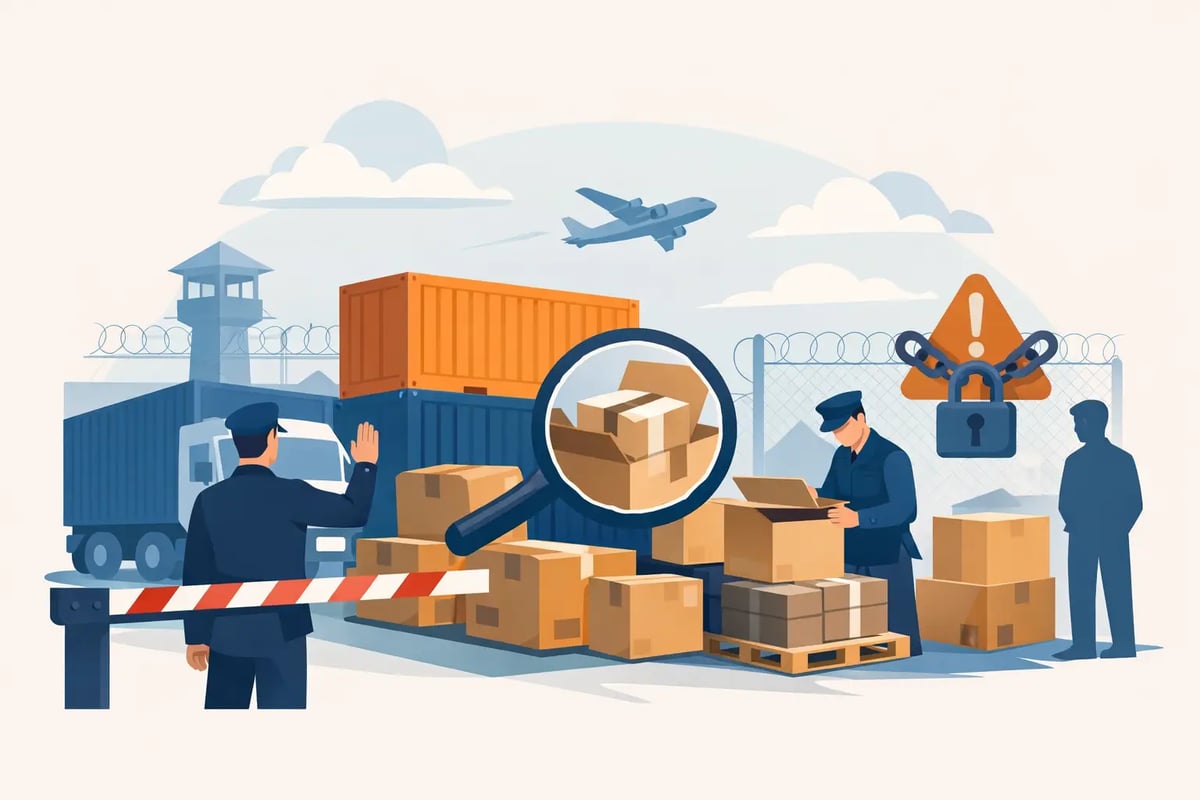
A lorry can arrive on time, the driver can have the right booking, and the goods can still be stopped before release. If you are asking, “why are goods held at border?”, the answer is rarely that customs has simply lost sight of the consignment. A hold usually means that a declaration, document, licence, security filing or inspection requirement needs to be resolved before the goods can legally move on.
For UK and Ireland traders, the key is to establish what type of hold applies and who is responsible for clearing it. The practical response to a customs query is very different from the response to a port health inspection, a transit issue or a safety and security rejection. Treating every delay as a generic “customs hold” can cost valuable time.
Why are goods held at border controls?
Border authorities use holds to manage risk, collect the correct duty and VAT, and prevent prohibited or non-compliant goods entering or leaving the country. Not every consignment is physically examined. Many holds are triggered electronically, sometimes before the vehicle has reached the port or terminal.
A goods movement may be held because the customs declaration has not been accepted, because it has been selected for a documentary or physical check, or because the declaration data does not match other records in the movement. The relevant authority may be HMRC, Irish Revenue, Border Force, port health, the Animal and Plant Health Agency, or another competent body depending on the goods and route.
The important distinction is between a delay caused by incomplete process and one caused by an intervention. An incomplete process can often be corrected quickly once the missing information is available. An intervention may require an appointment, an examination, samples, supporting evidence or a decision from the authority. Release times therefore vary considerably.
The most common reasons goods are stopped
Customs declaration errors or missing data
A declaration must accurately describe the goods, their value, origin, commodity code, customs procedure and parties involved. A mismatch in any of these areas can prevent release or create a query.
Common examples include an incorrect EORI number, a commodity code that does not fit the product description, an implausible customs value, or an omitted document code. A preference claim may also be questioned where the stated origin is not supported by the commercial paperwork.
The declaration does not stand alone. Authorities can compare it with the commercial invoice, packing list, transport document, transit movement, previous declaration and safety and security data. If the quantities, consignor details or goods descriptions differ, the movement may need to be reviewed before it is released.
Duty, VAT or guarantee problems
Goods cannot normally be released where required customs charges have not been settled or properly secured. This may happen when a deferment account cannot be used, the account has insufficient available guarantee, or the declaration is not correctly authorised to use it.
For businesses importing into Great Britain, a problem with duty payment, postponed VAT accounting details or authorisation references can delay clearance. For movements involving Ireland, the process may involve Irish Revenue systems and different payment or guarantee arrangements. The route and importer of record matter.
Do not assume that a payment issue is just an accounts matter. It can quickly become an operational issue at a terminal, particularly when storage, demurrage or driver waiting time begins to build.
Safety and security declarations
Entry Summary Declarations and other safety and security filings are separate from the main customs declaration. Depending on the movement, ENS, S&S GB, GVMS or PBN requirements may apply. If a required filing is missing, late, rejected or inconsistent with the vehicle and consignment information, the carrier or operator may be unable to proceed.
These requirements are especially relevant on roll-on roll-off routes, where data must be correctly linked before the vehicle boards or presents at the border. A customs entry accepted in one system does not automatically mean all movement and safety requirements have been completed.
Transit movements that are not properly discharged
Goods moving under transit remain under customs control until the transit procedure is correctly ended at the office of destination. If the movement reference, seals, vehicle details or arrival notification do not align, the goods may be held while the transit record is checked.
NCTS5 has made the quality and timing of transit data even more important. An unresolved transit movement can create pressure not only for the haulier but also for the principal, whose guarantee may remain at risk. Where a vehicle carries multiple consignments, one irregular item can affect the wider movement.
Licences, certificates and controlled goods
Some goods need more than a standard customs declaration. Products of animal origin, plants, food and feed, medicines, chemicals, waste, firearms, dual-use goods and excise goods can be subject to additional controls.
The supporting certificate, licence or pre-notification must be valid for the product, quantity, origin and destination. A document that is present but contains the wrong establishment number, species, weight or consignor can be as problematic as no document at all.
Checks may also be more likely for goods that present a higher regulatory risk. For example, a consignment may need to attend a border control post or designated inspection facility. In that case, release depends on the relevant authority completing its process, not solely on the customs declaration being accepted.
Documentary checks and physical examinations
Authorities use risk-based selection. A documentary check may require invoices, proof of origin, freight charges, purchase orders, product specifications or evidence supporting the declared value. A physical examination may involve opening the load, checking labels, counting goods, inspecting seals or taking samples.
Selection for a check does not necessarily mean an importer has done anything wrong. It can be random, intelligence-led, linked to the commodity, country of origin or trader history, or prompted by inconsistencies in the data. However, a weak or incomplete evidence trail will make the process slower.
Sanctions, prohibitions and intellectual property concerns
Goods may be stopped where there are concerns about sanctions, export controls, prohibited goods, counterfeit products or intellectual property rights. These cases can take longer because the authority may need to investigate ownership, end use, destination, origin or product status.
There is no quick administrative workaround for a legitimate compliance intervention. The right approach is to provide accurate information promptly and avoid moving, selling or altering the goods until formal instructions are received.
How to find the cause of a border hold quickly
Start with the movement reference and work from the systems used for that route. Check the customs declaration status, any message returned through CDS or ROS, the transit status where relevant, and the vehicle or trailer status in GVMS or PBN. Ask the haulier, ferry operator, terminal or freight forwarder for the exact hold message rather than relying on a broad update such as “customs issue”.
Then compare the declaration against the source documents. Check the importer and exporter details, EORI numbers, commodity codes, values, currency, Incoterms, country of origin, package counts and weights. Confirm that any licences, certificates and preference evidence are available and match the shipment.
It is also worth identifying who has authority to act. The importer may need to authorise a customs agent, provide a deferment approval, clarify the valuation, or contact a supplier for an urgent document. If responsibility is unclear, several parties can assume someone else is resolving the issue while storage charges increase.
What to do while goods are on hold
Respond with evidence, not assumptions. If the authority requests a commercial invoice or origin statement, provide the complete and legible document. If there is an error, establish whether the declaration can be amended or whether it must be cancelled and replaced. The right answer depends on the declaration status and the nature of the error.
Keep a clear record of every message, submission and document sent. This helps the person managing the clearance, but it also supports later review if the business needs to explain a delay, challenge a charge or improve its process.
Avoid sending repeated, conflicting corrections through different parties. One nominated operational contact should coordinate the importer, supplier, haulier, customs declarant and warehouse or terminal. Fast decisions matter, but unverified changes can create a second problem.
Preventing repeat delays
The most effective prevention work happens before dispatch. Build a reliable product data file with agreed commodity codes, descriptions, origin, valuation method and licence requirements. Make sure suppliers understand the level of detail required on invoices and packing lists. “Parts”, “samples” or “general merchandise” are not useful customs descriptions.
Test the route-specific process too. A movement from Great Britain to Ireland may need different data, timings and system actions from a movement into Great Britain or a transit movement through the UK landbridge. Staff should know who creates each declaration, who checks it, what reference the driver needs, and what happens if the vehicle is selected for inspection.
For businesses processing declarations in-house, software connected directly to customs systems can provide control and visibility, provided users are trained and master data is maintained. Others may prefer an agency model or a hybrid arrangement for unfamiliar commodities, busy periods or exception handling. Custran supports both approaches, helping teams make customs simple without losing sight of compliance.
A border hold is disruptive, but it is also useful evidence about where a process needs attention. Resolve the immediate issue, then review the trigger while the details are fresh. The next consignment should not depend on remembering what went wrong at 6am in a port queue.