News & Updates
GVMS vs PBN Differences for UK and Ireland Trade
Understand GVMS vs PBN differences for UK and Ireland RoRo freight, from who creates each record to timing, references and avoiding port delays on arrival.
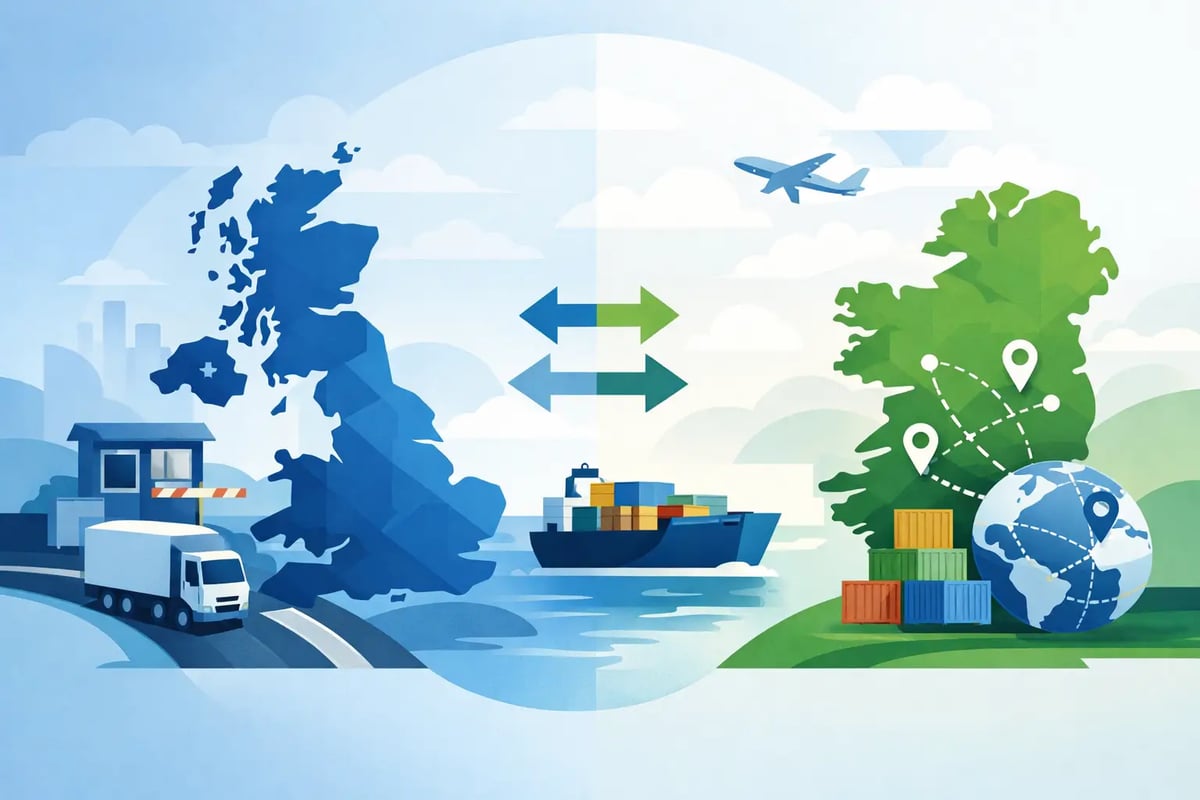
A truck can have correct commodity codes, a valid customs declaration and a confirmed ferry booking, yet still be stopped before boarding because the wrong border movement record is missing. Understanding GVMS vs PBN differences is therefore not a technical detail. It is a practical requirement for keeping RoRo freight moving between Great Britain, Northern Ireland and Ireland.
Both systems support pre-lodged customs processes for roll-on, roll-off movements. Both require accurate reference data before a vehicle reaches the port. But they belong to different administrations, produce different movement references and serve different stages of the border process. Treating them as interchangeable is a common cause of avoidable delays.
GVMS vs PBN differences at a glance
GVMS is the UK Government’s Goods Vehicle Movement Service . It is used on relevant movements through Great Britain ports, and on certain Northern Ireland routes, to create a Goods Movement Reference, usually called a GMR. The GMR brings together the declaration and movement references required for a specific vehicle crossing.
PBN is Ireland Revenue’s Pre-Boarding Notification system . It is used for relevant RoRo freight moving through Irish ports. A PBN record links the customs declaration references and transport details needed for the Irish border process, allowing Revenue to decide whether goods can proceed or need customs intervention on arrival.
The simplest distinction of GVMS vs PBN differences is this: GVMS supports the UK side of the movement and generates a GMR; PBN supports the Irish side and generates a PBN ID. Depending on the route and direction of travel, a haulier may need one, the other, or both.
For example, a consignment travelling by ferry from Great Britain to Ireland will commonly involve UK export formalities and Irish import formalities. The operational team must establish which party will create the required UK movement record, which party will submit the Irish PBN, and which declaration references must be available before check-in. The answer depends on the route, the goods procedure and the commercial agreement between importer, exporter, forwarder and haulier.
Different systems, different border decisions
GVMS is designed to allow customs declarations to be linked before the vehicle travels. The GMR may contain references for import or export declarations, transit movements, and other eligible documents or procedures. At the port, the carrier checks the GMR before allowing the vehicle to board. Once the crossing has been completed, GVMS can provide the instruction on whether the goods may continue or whether they require a customs check.
PBN performs a related but distinct function for Ireland Revenue. The PBN is submitted before boarding and is associated with the vehicle, ferry details and relevant declaration references. It enables the Irish authorities to process the movement before arrival and issue a routing outcome. The driver or operator must know that outcome and follow any instruction to attend customs, a Border Control Post or another designated location.
This means neither reference replaces the other. A GMR is not a PBN, and entering a PBN number where a GMR is required will not make a UK port movement valid. Equally, a valid GMR does not remove the need for a PBN when Ireland Revenue requires one.
The key operational difference: who needs the reference
A GMR is central to the UK carrier check-in process on GVMS routes. The person creating it must ensure it reflects the vehicle and all relevant goods references. Where multiple consignments travel in one vehicle, the GMR must account for each declaration or movement reference that needs to travel with that load.
A PBN is central to the Irish pre-boarding process. The person responsible must submit the correct information in time for Irish Revenue to assess the movement. The PBN status and routing instruction need to be communicated clearly to the driver and transport team.
In practice, responsibility may sit with a customs agent, a freight forwarder, the haulier, the importer or the exporter. It should never be assumed. Assign ownership in writing for every route and agree a cut-off time for receiving declaration references from each party.
Which routes require GVMS, PBN or both?
The exact requirement depends on the port, direction of travel, goods procedure and whether the movement involves Great Britain, Northern Ireland, Ireland or the wider EU. This is why route-specific process maps are more reliable than a generic instruction such as “the haulier handles customs”.
For RoRo movements involving Great Britain and Ireland, businesses often need to manage UK and Irish requirements in parallel. A GB-to-Ireland movement may require a UK export declaration and an Irish import declaration, with movement records created as required for the port and route. An Ireland-to-GB movement may require Irish export formalities, a PBN where applicable, and a UK import declaration linked to the relevant GVMS process.
Northern Ireland requires particular care. Its customs arrangements, movement directions and applicable systems can differ from a standard Great Britain to Ireland crossing. Goods status, origin, trader status and the precise movement route all matter. Do not copy a GB process for a Northern Ireland movement without confirming the current requirements.
Transit freight also needs careful handling. If goods are moving under the Common Transit Convention, the transit movement reference must be correctly associated with the appropriate pre-lodgement record. A declaration that is valid in CDS or NCTS does not automatically mean the vehicle is ready to board.
The data must match across every record
Most GVMS and PBN errors are not caused by a difficult system. They result from mismatched data, late declarations or unclear handovers between the customs and transport teams.
The vehicle registration, trailer details where required, sailing information and declaration references must align with the actual movement. If the trailer changes after the record has been submitted, or a consignment is removed from the load, the movement record may need to be updated before boarding. A driver arriving with a screenshot from an earlier booking is not a substitute for checking the live status.
Declaration references also need to match the procedure. Import and export declarations, transit MRNs, safety and security data, and controlled-goods documentation may each have a role, depending on the movement. Entering an MRN from the wrong declaration, using a reference that has not reached the required status, or omitting one consignment from a groupage load can hold up the entire vehicle.
Groupage is where discipline matters most. One vehicle may carry goods for several importers, with separate declarations and different customs agents. The operator creating the GMR or PBN needs a complete, verified reference schedule before check-in. Chasing an absent MRN while a lorry is queued at the port is expensive and puts the driver under pressure.
Build a process that works at the port
A dependable process starts before the day of travel. Confirm the route, departure port, arrival port, ferry operator, Incoterms and responsible customs parties at booking stage. These details determine which declarations and movement records are required.
Next, set a clear information deadline. Know GVMS vs PBN differences and make sure your customs team get commercial documents and goods data early enough to prepare declarations; and the transport team get released references early enough to create or validate GVMS and PBN records. Leave time to correct errors, especially for mixed loads, excise goods, food products, plants, animals or other controlled consignments.
Before dispatch, perform a final movement check. Confirm the vehicle registration, sailing, customs references, status of each declaration and any routing or inspection instruction. Give the driver concise instructions: which booking reference to present, whether a GMR or PBN is already in place, and what to do if customs directs the vehicle for inspection.
A useful internal control is to keep one movement file per crossing. It should show the vehicle, route, ferry, each consignment reference, the person who created the GMR or PBN, and the final status. This creates an audit trail and makes it far easier to resolve questions from a port operator, customer or customs authority.
GVMS vs PBN differences – When software and support make the difference
Businesses with regular UK-Ireland flows benefit from connecting declarations and movement processes rather than managing references across emails, spreadsheets and driver messages. The goal is not simply to submit data. It is to give operations staff a clear view of what is ready to travel, what is awaiting information and what needs attention before a port cut-off.
For teams processing declarations in-house, training is as important as system access. Staff need to understand the difference between a customs declaration and a border movement record, as well as who owns each action. For occasional traders or fast-growing operators, agency support can provide a practical safety net while internal capability is built.
Custran helps businesses process customs declarations in-house, manage relevant GVMS and PBN workflows, and access expert support when a movement is outside the usual process. The right approach may be self-service, outsourced processing or a hybrid model, provided responsibilities remain clear.
The most helpful question before any RoRo crossing is not “Do we have customs paperwork?” It is “Which system needs which reference, who has submitted it, and has the vehicle been cleared to follow the correct port process?” Answer that before the truck reaches the terminal, and customs becomes far more manageable.